

How To Invest Money In Starbucks
Who Is Starbucks' Favorite Customer?
The coffee king's strategy can be best understood by its focus on this one type of customer.

Updated: Jun 27, 2018 at 3:07PM
Published: Jun 16, 2016 at 9:05PM
In a little more than a generation, Starbucks (NASDAQ:SBUX) has gone from a mom-and-pop coffee business to one of the most recognized brands in the world. As of its latest earnings report, it had nearly 24,000 cafes around the globe, topped only by McDonald's and Subway in number of restaurant locations.
Starbucks has succeeded largely by offering customers an affordable luxury in the form of a decadent coffee drink, and a "third place" -- neither home, nor work -- where they could relax and take some time for themselves.
More than any other company, Starbucks deserves credit for changing the coffee experience in the U.S. and much of the world. Thirty years ago, espresso drinks like lattes and cappuccinos and their variations were mostly confined to Italian restaurants, while Americans sipped instant coffee or watered-down drip coffee for a caffeine buzz. On a visit to Italy, Starbucks CEO Howard Schultz recognized the opportunity of bringing such a traditional cafe to the U.S. The rest is history.

Image source: Getty Images.
Who is Starbucks' favorite customer?
Its target demographic is urban and affluent, often on-the-go white-collar professionals looking to take their caffeine fix with them to the office. The company considers its core customers to be educated, with an average age of 42, and average income of $90,000.
Starbucks focuses on this demographic by opening stores in upscale neighborhoods, making customer service a priority by paying above average wages for the restaurant industry and offering benefits like health insurance and tuition reimbursement.
The company's cafes are often seen as a token of gentrification, and a study by Zillow found that Starbucks locations tend to increase surrounding home values. Unsurprisingly, the company and its clientele seem to follow each other.
Transitioning to the take-out customer
When Schultz first began growing the Starbucks brand, he conceived of the cafe chain as a "third place" where customers could relax with a tasty beverage. Increasingly, however, the company is focusing on higher value take-away customers, who don't require features like a seating area, bathrooms, wi-fi, or cleanup in the way that sit-down customers do, yet they pay the same price for their orders as higher-maintenance customers. In recent years, the company has invested heavily in its Mobile Order & Pay platform in order to quickly serve such on-the-go customers, and discouraged customers from lingering on laptops by removing seats in some stores and replacing cozy furniture like couches with hard-surfaced chairs. Starbucks also said that about 60% of new stores in the U.S. will be drive-thrus -- another way of reaching take-away customers. More recently, the company has begun experimenting with Express stores, an ultra-small format at just around 500 square feet, designed for commuters to quickly grab a drink and go.
As Starbucks continues to expand, expect it to de-emphasize the laptop-wielding sit-down customers and find new ways to cater to those taking their orders to go.

Image source: Getty Images.
Searching for a sweet tooth
Finally, while the young, urban, and affluent make up Starbucks' core customer base, not all orders are equal. For instance, a customer who regularly orders a specialty coffee drink for $5 is much more valuable than one who only gets brewed coffee for $2. The margin on beverages tends to be higher than food in the restaurant industry, so while Starbucks would like you to order a pastry or sandwich -- especially as it's invested in making its hot food options more appealing -- to go with your drink, the beverage tends to be the more profitable of the two items.
Bringing it all together, it seems like Starbucks' favorite customer is a young, urban, affluent, white-collar professional who orders a specialty coffee drink to go, taking it with them in the car or to the workplace. This customer gives Starbucks its most profitable business, and the company has taken steps, such as Mobile Order & Pay, to prioritize them, which has proven overwhelmingly popular since it launched last year.
This article represents the opinion of the writer, who may disagree with the "official" recommendation position of a Motley Fool premium advisory service. We're motley! Questioning an investing thesis -- even one of our own -- helps us all think critically about investing and make decisions that help us become smarter, happier, and richer.
Motley Fool Returns
Stock Advisor S&P 500
683% 145%
Join Stock Advisor
Discounted offers are only available to new members. Stock Advisor will renew at the then current list price. Stock Advisor list price is $199 per year.
Stock Advisor launched in February of 2002. Returns as of 11/11/2021.
Cumulative Growth of a $10,000 Investment in Stock Advisor Calculated by Time-Weighted Return 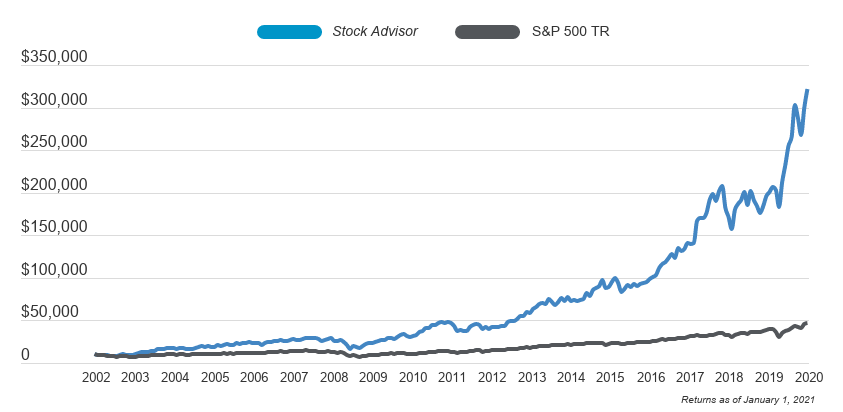
Average returns of all recommendations since inception. Cost basis and return based on previous market day close.
Related Articles
- Starbucks is Mixing Coffee With Crypto
- Higher Wages Are Brewing At Starbucks. How Could This Help Investors?
- 5 Reasons There Has Never Been a Better Time to Buy Starbucks Stock
- No Surprise! Starbucks Will Focus New Store Growth Internationally in 2022
- Starbucks to Nearly Double New Store Growth in Fiscal 2022
How To Invest Money In Starbucks
Source: https://www.fool.com/investing/2016/06/16/who-is-starbucks-favorite-customer.aspx
Posted by: thomasousizems1984.blogspot.com
0 Response to "How To Invest Money In Starbucks"
Post a Comment